

First Projects on Early Modern Jewish History are being implemented
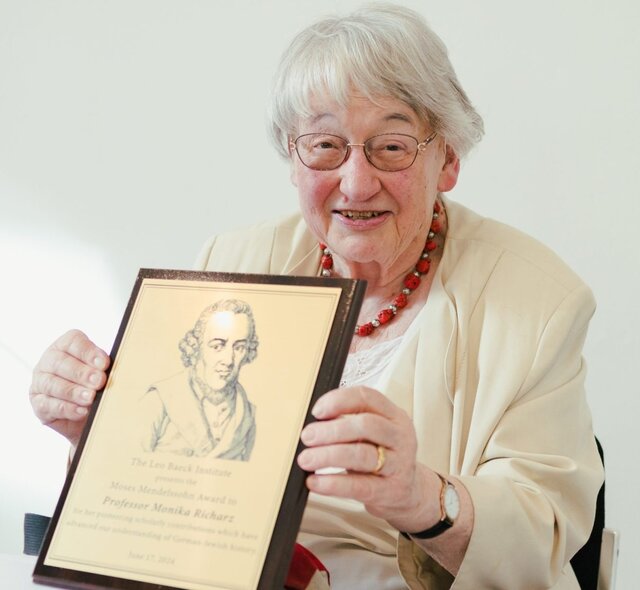
Thanks to a generous donation from Prof. (emeritus) Dr. Monika Richarz, the Monika Richarz-Fonds – Research on Early Modern Jewish History has been established at the IGdJ. The fund supports projects that examine the period’s significant demographic, religious, social and political processes through innovative research questions and new methodological approaches.
To mark the launch of this funding scheme, four research projects will be supported. They cover a wide scope, analysing both internal developments within the changing Jewish world as well as profound shifts in the status and treatment of Jews in different states and societies.
Dr. Johannes Czakai (Jerusalem) examines the history of early modern Silesia through the lens of conversions of Jews to Christianity. The aim is to study Jewish life and Jewish-Christian conversions in a confessionally mixed region shaped by various geographic and cultural boundaries.
Dr. Magdaléna Jánošíková (Amsterdam) focuses on epistemic agency and examines how Jewish communities and their members constituted, contested, and transmitted expertise on their own terms, and how these terms reflect the changing norms concerning evidence, testimonies, and facts.
Dr. Uta Lohmann (Hamburg) is developing an exhibition and research project on Moses Mendelssohn and the Haskalah in Hamburg. The project aims to examine the of the Haskalah as a Jewish modernisation and educational movement with trans-regional networks, which, originating in Berlin, also influenced Jewish intellectual life in the Hamburg area.
Tim Meier M.A. (Halle-Wittenberg) researches the conflicts over power and economic policy under absolutism right up to the widely debated political issue of Jewish emancipation, tracing the argumentative strategies with which the various actors sought to legitimise their positions within the context of the respective political and economic order.
Detailed project outline are available here.
We wish all the funded research projects every success!
Image: Leo Baeck Institute – New York|Berlin (Photographer: Ole Witt).